Commodity Market
Tools for working with commodities, precious metals and price risks
What is the commodity market?
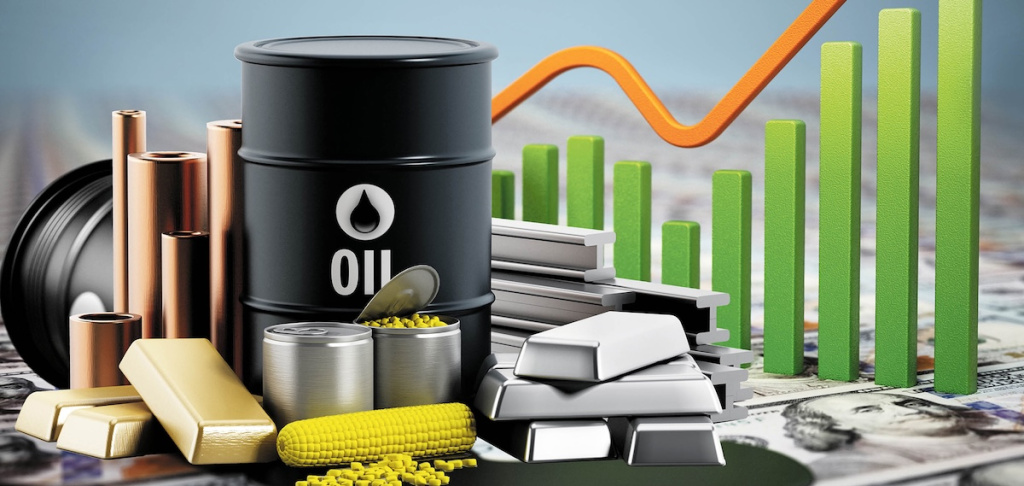
These commodities include oil, natural gas, gold, silver, copper, wheat, corn, sugar, coffee, cotton and many other assets. Their prices affect not only investors, but also companies, consumers, governments, inflation, production and global trade.
For a private investor, the commodity market is most often of interest as a way to diversify, protect against inflation, participate in price movements of precious metals or use specific trading ideas. At the same time, private investors today rarely buy delivery contracts with actual physical supply of raw materials. They usually use exchange-traded instruments, funds, ETFs, futures or other financial instruments that make it possible to obtain price exposure without physically storing the commodity.
For legal entities, the commodity market has a more practical significance. Companies may use it to secure raw materials, plan purchases, manage cost of goods sold or financially hedge changes in prices. For producers, processors, importers, exporters and large consumers of raw materials, this may be an important element of business risk management.
The commodity market is the market where raw materials and related financial instruments are bought and sold. In a broad sense, it includes both the physical market, where the commodity is actually delivered to the buyer, and the financial market, where participants trade contracts linked to the change in the commodity’s price. It is the financial part of the commodity market that is most often accessible to investors through exchanges and brokerage infrastructure.
The main feature of the commodity market is that its underlying asset is not a company’s share and not a debt obligation, but a real commodity. It may be a barrel of oil, an ounce of gold, a tonne of copper, a bushel of wheat or another standardised asset.
The price of such a commodity depends on supply and demand, inventories, production, logistics, seasonality, weather, geopolitics, interest rates, the US dollar exchange rate and market expectations.
How did the commodity market emerge?
Trading in commodities appeared long before modern financial markets. People exchanged grain, metal, salt, livestock, textiles and other goods even before the emergence of organised exchanges and modern money.
With the development of cities, international trade and industry, there arose a need for more organised trading in raw materials. Producers, traders and buyers needed to agree in advance on price, volume, quality and delivery timing of goods.
This is how commodity exchanges and standardised contracts gradually emerged. They made it possible not only to buy and sell the physical commodity, but also to fix the price of future delivery in advance. This became the basis for the development of futures contracts and the modern derivatives market for commodities.
Today, commodity markets are part of global infrastructure. Prices of oil, gas, gold, copper, grain and other commodities are monitored daily by investors, banks, producers, central banks and government authorities.
What types of commodity assets are there?
Commodity assets are usually divided into several major groups.
Energy commodities include oil, natural gas, gasoline, diesel fuel, fuel oil and other energy sources. Their prices depend on production, consumption, inventories, decisions of producer countries, sanctions, transport infrastructure and the global economic cycle.
Precious metals include gold, silver, platinum and palladium. Gold is often regarded as a defensive asset, a store of value and a diversification tool. Silver combines features of both a precious and an industrial metal. Platinum and palladium are actively used in industry, including the automotive sector.
Industrial metals include copper, aluminium, nickel, zinc, lead and other metals. They are closely linked to industrial production, construction, energy infrastructure, electrification and global economic growth.
Agricultural commodities include wheat, corn, soybeans, sugar, coffee, cocoa, cotton and other products. Their prices may depend on yields, weather conditions, seasonality, logistics, trade restrictions and demand from the food industry.
Livestock commodities include cattle, pork and other assets related to animal farming. This segment depends on consumption, feed costs, sanitary risks, logistics and the structure of demand.
How do investors gain access to the commodity market?
Therefore, in practice, financial instruments are used.
Futures contracts allow the purchase or sale of a commodity in the future at a price agreed in advance. This is one of the main instruments of the commodity market. However, futures are complex instruments and require understanding of contract maturities, margin requirements, volatility and rollover risk.
Commodity ETFs and funds make it possible to gain exposure to the price of a commodity or a basket of commodities through an exchange-traded instrument. Some funds may be backed by a physical asset, such as gold. Others use futures contracts, which creates additional features and risks.
Shares of commodity companies provide indirect exposure to the commodity market. For example, shares of oil and gas, mining or gold-mining companies may depend on the prices of the corresponding raw materials, but they also carry corporate, operational and country risks.
Structured products and derivative instruments may be used for more complex strategies, but they require especially careful understanding of terms, risks and possible losses.
What are delivery contracts?
Such contracts are important for professional market participants: producers, processors, traders, large consumers of raw materials and companies that genuinely need the physical commodity.
For a private investor, delivery contracts are usually not a convenient or suitable instrument. Actual delivery requires warehouses, logistics, insurance, quality control, settlement and operating infrastructure. Therefore, private investors more often use cash-settled futures, ETFs, funds or other instruments that provide price exposure without receiving the commodity.
Why does a private investor need the commodity market?
The first function is diversification. Commodity prices do not always move in the same way as equities or bonds. Therefore, particular commodity instruments may complement a portfolio and reduce dependence on traditional asset classes.
The second function is inflation protection. During periods of rising prices for energy, metals or food, commodity assets may reflect inflationary pressure in the economy. Precious metals and energy commodities are especially often considered in this context.
The third function is access to precious metals. Gold and silver may be used as a separate element of the portfolio, linked to preservation of value, currency risks, demand for defensive assets and expectations regarding interest rates.
The fourth function is trading ideas. Experienced investors may use commodity instruments to work with short-term or medium-term price movements. However, such strategies require understanding of volatility, margin, contract maturities and risks.
Why does the commodity market matter for legal entities?
A company that uses raw materials in production may depend on prices of energy, metals, agricultural commodities or other resources. A rise in prices may increase cost of goods sold, reduce margins and worsen financial results.
The commodity market allows such companies to plan purchases in advance, lock in a price or partially hedge the risk of an unfavourable change in the cost of raw materials. This is especially important for producers, processors, importers, exporters, transport companies, the construction sector and agricultural businesses.
For example, a company that will need a certain volume of fuel in several months may use market instruments to reduce the risk of a sharp price increase. An agricultural producer, on the contrary, may seek to protect itself against a fall in the price of future output.
Thus, for legal entities, the commodity market is not only a source of investment opportunities, but also a tool for managing cost of goods sold, revenue, cash flows and business risks.
What is hedging in the commodity market?
In the commodity market, hedging is especially important because commodity prices may be highly volatile. Weather, geopolitics, decisions of producer countries, supply disruptions, changes in demand and currency fluctuations may quickly change the value of a commodity.
A buyer of raw materials may hedge against the risk of a price increase. For such a participant, it is important to understand in advance at what price the resource will be purchased in the future.
A producer or seller of raw materials may hedge against the risk of a price decline. For such a participant, it is important to protect future revenue and reduce uncertainty of cash flows.
Hedging does not always mean obtaining the maximum benefit. Its main purpose is not to guess the market, but to make the financial result more predictable and reduce the impact of unfavourable price movements.
Precious metals as part of the commodity market
Gold is traditionally regarded as an instrument for preserving value, especially during periods of inflation, geopolitical uncertainty, declining confidence in currencies or instability of financial markets. At the same time, the price of gold may also decline and does not guarantee capital protection in every situation.
Silver combines investment and industrial characteristics. It may react both to investor demand and to industrial consumption.
Platinum and palladium are more closely linked to industry, especially the automotive sector and emission-cleaning technologies. Therefore, their prices may depend not only on investment demand, but also on technological change, regulation and the industrial cycle.
For private investors, access to precious metals may be obtained through physical metals, exchange-traded funds, futures, shares of mining companies or other financial instruments. Each method has its own features, costs and risks.
Main risks of the commodity market
Price risk is linked to the fact that the value of raw materials may change sharply. Sometimes price movements depend on factors that are difficult to assess in advance: weather, conflicts, regulatory decisions, logistical disruptions or unexpected changes in demand.
Futures contract risk is linked to contract maturities, margin requirements and the need to roll a position from one contract into another. The futures price may differ from the current price of the physical commodity, and the market structure may affect the investor’s result.
Currency risk is also important because many global commodities are traded in US dollars. For an investor or company whose income and expenses are denominated in another currency, exchange rate movements may alter the final result.
Liquidity risk means that not all commodity instruments can be bought or sold equally easily at a fair price. In less liquid markets, spreads may be wider and trade execution may be worse.
For legal entities, there is also operational risk: if the financial hedge does not correspond to actual volumes, timing or the structure of purchases and sales, this may lead to additional losses or ineffective protection.
How does the commodity market differ from equities and bonds?
In the commodity market, there is no corporate profit in the usual sense and no coupon income as with bonds. The result depends mainly on the change in the price of the commodity, the cost of storage, the structure of the futures market, the exchange rate and the chosen access instrument.
For the investor, the commodity market may be a source of diversification and protection against specific macroeconomic risks. For businesses, it may be a tool for managing cost of goods sold, purchases, revenue and price uncertainty.
Who may the commodity market be suitable for?
At the same time, it is important for a private investor to understand that commodity instruments may be complex. This is especially true for futures, margin operations, leveraged instruments and funds using derivative contracts.
For legal entities, the commodity market may be useful if their business depends on prices of raw materials, energy, metals, agricultural products or logistics costs. For such companies, commodity instruments may become part of a risk management system.
Conclusion
For private investors, this market is most often used for diversification, work with precious metals, protection against inflation or gaining price exposure to commodity assets. At the same time, real delivery contracts rarely suit retail investors because of the complexity of storage, logistics and operating infrastructure.
For legal entities, the commodity market has practical significance. It helps secure raw materials for business, plan purchases, manage cost of goods sold and financially hedge changes in prices.
The main value of the commodity market lies not only in the possibility of earning on price movements, but also in the ability to manage risks that directly affect a portfolio, a business and the economy.